
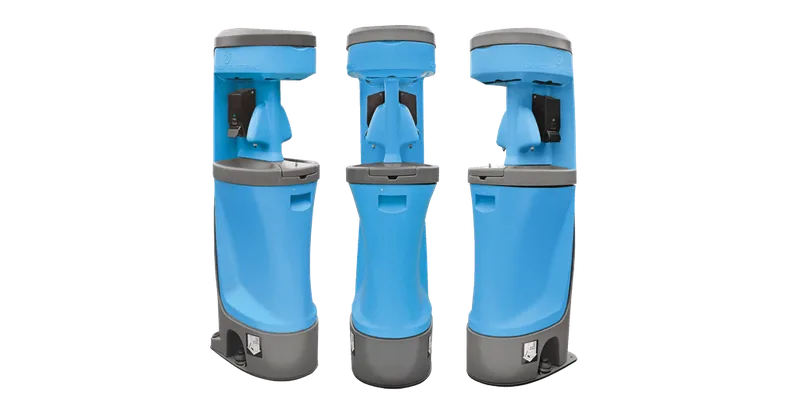
Add handwashing where people need it
Handwashing support is useful where people use restrooms, eat, handle shared materials or work outdoors. Start with the routes between those activities and identify where a real sink is needed. A hand-sanitizer dispenser is not a washing station and should not be treated as proof that a sink requirement has been met.
A standard toilet cabin provides toilet access, not necessarily a sink. Confirm any wash facility included in the chosen unit, or plan a separate station. Where accessible use is needed, review the wash station’s controls and usable approach as well as the restroom route; a nearby location alone does not establish that it works for everyone.
- Outdoor meals, receptions, and community gatherings
- Construction, cleanup, and maintenance work
- Children’s activities, sports areas, and hands-on events
- Temporary sites without a convenient usable sink
Pair stations with restrooms, food, and active work areas
A station works best when it is close enough to be practical at the moment it is needed. Place it near, rather than hidden behind, a restroom area; locate additional wash-up support along the path to food service or beside an active work zone when those areas are separated.
Do not assume one location serves every part of a spread-out property. Share a simple site sketch showing restroom locations, food vendors or serving tables, crew entrances, activity areas, and anticipated guest circulation so the layout can be reviewed as a whole.
- Keep food-service wash-up needs distinct from restroom traffic where the layout allows.
- Avoid putting a station where a queue would cross a serving line or equipment route.
- Identify any venue rules governing food, water, or sanitation placement.
Keep stations approachable without blocking traffic
Choose a reasonably level, stable location that users can reach without stepping through parking traffic, equipment movement, or a crowded exit. Leave a clear approach and avoid narrow passages, slopes, soft ground, and places where doors, gates, or vendor operations could interfere with access.
Delivery and later servicing also need a workable route. Let the rental coordinator know about gates, low clearances, limited turning space, controlled entry, event setup periods, and any place where vehicles cannot travel.
- Mark the intended placement point and delivery approach.
- Keep emergency routes, drive lanes, and accessible paths clear.
- Discuss surface conditions and any change expected after rain or heavy use.
Confirm supplies and servicing needs for the schedule
Set out who supplies and replenishes clean water, soap and towels, and how the station’s used water is collected and removed. Do not assume a self-contained unit can be left for the whole rental without attention. Expected attendance, washing frequency and the time between service opportunities determine the practical care arrangement.
Before use begins, agree who will check the station and report low supplies, damage or an unusable wash point. Keep the service approach open and establish the collection window. A quote should clarify the equipment, delivery, pickup and refill or servicing tasks included; extensions and extra attention should be discussed before they are needed.
- Expected start and end dates or event schedule
- People using each area and periods of heavier use
- Access instructions for delivery, service, and collection
- On-site contact information and any venue approval requirements
Frequently asked questions
Answers to common questions about adding and positioning portable handwashing support.
Questions before you book
When should I add a handwashing station?
Add one when people need a nearby wash-up point beyond a permanent sink, particularly around portable restrooms, food service, active work, or outdoor activities. The site layout and expected use help determine where it will be most useful.
Where should handwashing be placed?
Place it on a stable, approachable route near the activity it supports, while keeping walkways, vehicle lanes, exits, and accessible paths clear. A site sketch can reveal when more than one area needs support.
Can handwashing support both events and job sites?
Yes. Events may need wash-up locations near restrooms and food, while job sites may need them near crew work areas and entrances. Share the use pattern and access conditions so the arrangement fits the site.
Does a portable washing station need a tap connection?
Not every model does. Self-contained equipment can store clean water and collect used water, while other arrangements may have connection requirements. Confirm the offered station, its water handling and replenishment plan before relying on a venue tap.