
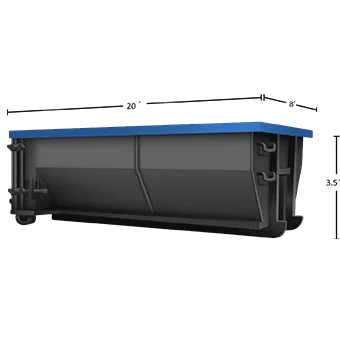
Decide whether the roll-off format fits the job
Roll-off containers can support projects that accumulate a substantial amount of debris at one location. Explain whether the work is a clear-out, renovation, demolition-related cleanup or another activity, and identify the materials rather than relying on a general project label.
The provider should confirm a suitable available container, its dimensions and loading terms. Volume is only part of that choice: dense materials, large items and the project's loading method can affect the arrangement. Ask about allowed materials and weight provisions before treating a container as an unrestricted waste receptacle.
Check the truck's work area beyond the container footprint
Describe the entrance width, turns, overhead obstructions, slopes and surface between the road and the proposed position. The truck must be able to place the container and return to collect it. Do not use only the container's dimensions to decide that the access is sufficient.
Confirm the ground's suitability and any surface-protection arrangement with the provider and property owner. Mark sensitive areas and explain restrictions before delivery; a photograph alone cannot establish load-bearing suitability. The driver should not be directed onto an unassessed route simply because it appears convenient.
Organize loading without blocking the return visit
Leave the agreed working area clear of parked vehicles, stored materials and other equipment. If the proposed container has a loading door, confirm how it will operate and how much usable space it needs. Keep people out of truck movements during placement and collection.
Follow the provider's instructions for permitted loading, including any limits on height, distribution and heavy materials. Do not overload, climb into or attempt to move the container. Ask about uncertain items before adding them; unexpected material can change disposal arrangements.
Plan the final load and collection together
Describe when the debris will be ready and whether it will arrive in stages. Ask how additional collections or exchanges are arranged if needed. Confirm how pickup is requested, who provides site access and what must be clear when the truck returns.
Review the quote for container type, rental period, delivery, collection, accepted material, disposal or weight inclusions and possible charges for extra time or a changed load. Permission for the location remains separate: obtain property approval and check applicable requirements before occupying a street or shared area.
Questions before you book
If the container fits, does that mean the truck can deliver it?
No. Truck approach, turning, placement movement and overhead clearance need their own review. Provide the full route and proposed working area, not just the container-sized space.
Can the container stay where the cleanup crew finds it easiest?
The location must also meet property conditions, safe access and collection requirements. Agree it with the responsible property contact and provider before delivery.
What if additional debris appears after the order?
Identify the new materials and amount to the provider before loading them. Capacity, permitted material and collection arrangements may need to change.